ZWO Seestar S30 Review


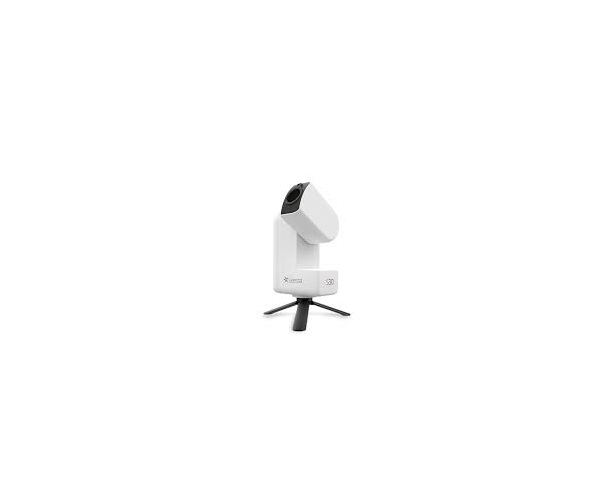
The ZWO Seestar S30 is one of the most interesting entry-level smart telescopes available today. Instead of learning traditional telescope alignment, eyepieces, focusing, and astrophotography software, you put the S30 on its tripod, open the app, select an object, and let the telescope do most of the work.
At the current U.S. price of $399, it is particularly compelling for beginners. (Seestar US Official Store)
⭐ Overall rating: 8.5/10
Best for: Beginners, casual astrophotographers, families, travelers, and anyone who wants impressive deep-sky photographs without a complicated telescope setup.
Not ideal for: Serious planetary photography, traditional visual observing through an eyepiece, or experienced astrophotographers who want maximum resolution and manual control.
What makes the S30 special?
The S30 is essentially a tiny automated observatory.
It combines:
- 30mm apochromatic triplet telescope
- 150mm focal length
- f/5 optical system
- Sony IMX662 Starvis 2 sensor
- Motorized tracking
- Automatic alignment and focusing
- Built-in filters
- 64GB storage
- 6,000mAh battery
- Wi-Fi/Bluetooth
- Smartphone/tablet control
- Solar filter
- AI noise reduction
- Live stacking
- Equatorial mode support
The complete unit weighs only 1.65 kg (3.64 lb) before the tripod. (Seestar US Official Store)
That’s remarkably small for something capable of photographing galaxies and nebulae.
🌌 Image quality
This is where the S30 becomes much more impressive than its tiny 30mm aperture suggests.
The Sony IMX662 sensor is sensitive and relatively low-noise, while the telescope uses live stacking to combine multiple exposures. ZWO also includes a dual-band filter designed around OIII and H-alpha wavelengths, which can significantly improve emission-nebula imaging, particularly under light-polluted skies. (ZWO Astro USA)


The important thing to understand is that you’re not looking through the telescope with your eye. The S30 is primarily an imaging instrument. The image on your phone/tablet gets better as the telescope gathers and stacks more exposures.
That’s actually one of its biggest advantages.
Where it shines
Nebulae: ⭐⭐⭐⭐⭐
Star clusters: ⭐⭐⭐⭐⭐
Large galaxies: ⭐⭐⭐⭐
Moon: ⭐⭐⭐⭐
Sun: ⭐⭐⭐⭐
Planets: ⭐⭐½
The 150mm focal length gives the S30 a relatively wide view, which is excellent for large objects such as the Orion Nebula and larger star fields.
The downside is that 30mm of aperture simply isn’t a lot of light-gathering power. Small galaxies and planetary details don’t have the resolution or brightness you’d get from a larger telescope.
📱 The app is arguably the S30’s best feature
Traditional astrophotography can be intimidating.
With the S30, the basic workflow is basically:
Set it down → turn it on → connect your phone → choose an object → watch it photograph itself.
The app handles things such as locating targets, tracking, stacking and image processing.
This is one reason reviews have consistently praised the S30 for its ease of use. Digital Camera World, for example, highlighted its compact design, user-friendly app and built-in filters, while Space praised its fast setup and interface. (Digital Camera World)
For someone who has never used a telescope before, that’s a huge advantage.
🔭 Traditional telescope vs. S30
| Feature | Traditional telescope | Seestar S30 |
|---|---|---|
| Setup | Can be complicated | ⭐ Very easy |
| Finding objects | Manual/assisted | ⭐ Automatic |
| Eyepiece viewing | ✅ | ❌ |
| Astrophotography | Requires additional equipment | ⭐ Built in |
| Tracking | Depends on mount | ✅ |
| Image stacking | Computer/software often needed | ⭐ Automatic |
| Portability | Varies | ⭐⭐⭐⭐⭐ |
| Learning curve | Moderate–high | ⭐ Very low |
| Manual control | ⭐⭐⭐⭐⭐ | ⭐⭐ |
| Deep-sky photography | Excellent with right equipment | ⭐⭐⭐⭐ |
| Planetary imaging | Better with larger telescope | ⭐⭐½ |
The S30 isn’t really trying to replace a traditional telescope.
It’s trying to remove the complexity between you and an astronomical photograph.
☀️ Solar photography is a nice bonus
The included magnetic solar filter makes the S30 capable of safely imaging the Sun when the filter is properly installed.


You can also photograph the Moon and planets.
However, I wouldn’t buy the S30 primarily for planetary imaging. Its short 150mm focal length and small aperture aren’t well suited to getting highly detailed views of Jupiter or Saturn.
🎒 Portability is fantastic
This may be the S30’s biggest practical advantage.
The telescope itself is only 210 × 140 × 80 mm and weighs about 1.65 kg. It has a 6,000mAh battery and can run for up to roughly six hours according to ZWO’s manual. (Zwo Astro)
You can realistically throw the S30 in a backpack or camera bag and take it somewhere with darker skies.
And that’s important because:
A telescope that you actually take outside is more useful than a much better telescope that stays in the closet.
🌃 How does it perform in light pollution?
Surprisingly well.
The S30’s built-in filters and computational imaging make it considerably more useful from suburban environments than a basic inexpensive telescope.
It won’t magically eliminate light pollution, but stacking multiple exposures and using the appropriate filter can reveal objects that would be extremely difficult to see with the naked eye.
That makes the S30 particularly attractive for people living in cities or suburbs.
⚠️ The biggest weakness: aperture
This is the S30’s Achilles’ heel.
30mm is small.
The S30’s computational processing can make the resulting images look dramatically better than what you’d expect from such a small telescope, but software can’t completely overcome the laws of optics.
Compared with the larger Seestar S50, the S30 gives up resolution and light-gathering ability.
And compared with the newer S30 Pro, the standard S30’s camera resolution is also a significant limitation. One recent comparison notes that the standard S30 uses a roughly 2.1MP sensor, while the S30 Pro moves to an 8.3MP sensor. (Skies & Scopes)
So if you’re primarily interested in getting the best possible astrophotographs, I’d seriously consider spending more.
S30 vs. S30 Pro
This is probably the most important buying decision right now.
| Seestar S30 | Seestar S30 Pro | |
|---|---|---|
| Aperture | 30mm | 30mm |
| Portability | ⭐⭐⭐⭐⭐ | ⭐⭐⭐⭐⭐ |
| Beginner friendly | ⭐⭐⭐⭐⭐ | ⭐⭐⭐⭐⭐ |
| Image resolution | Good | Much better |
| Price | $399 | ~$699 |
| Best for | Beginners/value | Better image quality |
The S30 makes the most sense if $399 is your budget.
But if you’re willing to spend around $300 more and astrophotography is the primary reason you’re buying it, I’d lean toward the S30 Pro.
🏆 Pros
✅ Extremely easy to use
You don’t need to become an astronomer before you can start taking pictures.
✅ Very portable
At 1.65kg, this is dramatically easier to transport than most conventional astrophotography rigs. (Seestar US Official Store)
✅ Excellent value
At $399, it’s one of the least expensive ways to get into automated astrophotography. (ZWO Astro USA)
✅ Great for deep-sky beginners
Nebulae, clusters and larger galaxies are where the S30 is most enjoyable.
✅ Built-in filters
You don’t need to immediately start buying a collection of astronomy accessories.
✅ Solar capability
The included magnetic solar filter adds another use case.
✅ Automatic image processing
You can get a shareable image without spending hours in Photoshop or specialized astrophotography software.
👎 Cons
❌ Small 30mm aperture
The biggest limitation.
❌ Not a traditional telescope
There is no eyepiece. You’re looking at a camera feed rather than directly through glass.
❌ Limited planetary performance
Don’t expect spectacular close-ups of Saturn’s rings or Jupiter’s cloud bands.
❌ Relatively low-resolution sensor
This becomes more noticeable when you crop into smaller objects.
❌ Smartphone/app dependency
The S30 is designed around the Seestar app.
❌ Light pollution still matters
The filters help, but they can’t completely defeat a bright urban sky.
💰 Is the Seestar S30 worth $399?
Yes.
At the current $399 U.S. price, I think the S30 is one of the easiest recommendations in astronomy for a beginner. (Seestar US Official Store)
I’d describe it less as a traditional telescope and more as a point-and-shoot astrophotography camera with a telescope attached.
And that’s actually a compliment.
I’d buy the S30 if you:
- Have never owned a telescope
- Want astrophotography rather than traditional eyepiece viewing
- Live in a suburban area
- Want something portable
- Want to photograph nebulae and galaxies
- Don’t want to spend hours learning astrophotography software
- Want something the whole family can use
I’d skip it if you:
- Want detailed planetary photography
- Want to visually observe through an eyepiece
- Already own a good astrophotography setup
- Want maximum resolution
- Expect professional-level photographs straight out of the box
⭐ Final verdict
ZWO Seestar S30: 8.5/10
Ease of use: 10/10
Portability: 10/10
Deep-sky imaging: 8.5/10
Image quality: 8/10
Planetary imaging: 6/10
Value: 9.5/10
Beginner friendliness: 10/10
The Seestar S30 is a great example of how computational photography is changing amateur astronomy. Instead of spending thousands of dollars assembling a telescope, tracking mount, astrophotography camera, filters and computer, you can put a small $399 device on a tripod and start photographing the universe.
My biggest recommendation: if you’re deciding between the S30 and spending substantially more, ask yourself whether you want simplicity or maximum image quality. For simplicity, the S30 is fantastic. If image detail is the priority, move up to the S30 Pro or a larger-aperture smart telescope.
ZWO Seestar S30 — official product page